
Hybrid Conferencing
Future Workplace research project
Hybrid Conferencing Project
Exploring sustainability, inclusion and the future of academic conferences
How can academic conferences become more sustainable, accessible and inclusive, without losing what makes them valuable in the first place? What are the real experiences of academics, organisers and professional staff engaging with hybrid and remote conferencing today?
About the project
The Hybrid Conferencing Project invites academics, conference organisers, chairs, facilitators and professional staff to share their experiences of hybrid and remote conferencing.
We are particularly interested in what works well, what does not, and how conferences might evolve in the future.
At a glance
academic conferences analysed
Our first phase audited conference provision across business and management studies.
offered remote participation
Even among those conferences, there was considerable variation in what “hybrid” or “remote” participation actually meant.
Project overview
Click through the sections below to learn more about the project.
Project background
The project began with a simple question raised during discussions within the Blueprint sustainability team at Leeds University Business School:
Do we actually need to travel in order to participate meaningfully in academic conferences?
As conversations around sustainable travel policies developed, Matt and Lena became increasingly interested in the wider implications of hybrid and remote conferencing for academic life.
Online and hybrid participation expanded rapidly after the pandemic, but practices across academia remain inconsistent and often confusing. Some academics experience hybrid conferencing as flexible and inclusive, while others experience it as isolating, difficult or professionally limiting.
From this starting point, we developed the Hybrid Conferencing Project as part of a wider research initiative exploring sustainability, inclusion and the future of academic communication.
Our research
The project combines staff-led research with student partnership and collaboration. Through the Student Sustainability Champions initiative, we recruited Amelie, who carried out a large-scale audit of hybrid and remote conferencing practices under our supervision.
As part of the first phase of the project, Amelie analysed 177 academic conferences across business and management studies. One of the key findings was that only 17% offered any form of remote participation.
Even among those conferences, there was considerable variation in what “hybrid” or “remote” participation actually meant, ranging from livestreamed keynotes to fully integrated online participation models.
The audit revealed both the growing interest in hybrid conferencing and the lack of clarity and consistency across the sector. Our first priority is therefore to refine and expand the audit in order to provide greater visibility and understanding of the different models of hybrid participation currently available to business and management scholars.
The second phase of the project now focuses on the lived experiences of hybrid conferencing. We are conducting interviews and exploratory discussions with colleagues who have engaged with hybrid conferencing as participants, organisers, chairs, facilitators and infrastructure providers.
Student partnership
A central part of the project has been the collaboration between staff and student researchers. Amelie’s work on the initial audit has been foundational to the development of the project and helped shape the direction of the wider research programme.
Working through the Student Sustainability Champions initiative, Amelie analysed 177 academic conferences across business and management studies and mapped the different forms of hybrid and remote participation currently being offered across the sector.
Her work has provided an important evidence base for the next phase of the project and the emerging findings were presented through a research poster at the LUBS Sustainability Day, where the project contributed to wider conversations around sustainability, accessibility and the future of academic communication.
The project reflects our broader commitment to collaborative, participatory and sustainability-focused research that connects academic inquiry with practical institutional challenges.
Intended impact
The Hybrid Conferencing Project aims to contribute to ongoing debates about the future of academic conferences and professional exchange in higher education.
We are particularly interested in how conferencing practices affect inclusion, accessibility, sustainability, visibility and participation across different academic communities and career stages. This includes questions around caring responsibilities, disability and accessibility, financial pressures, visa restrictions and environmental impact.
Alongside the ongoing research, one of the key practical outputs of the project will be the development of a faculty guidance document on hybrid and remote conferencing. The aim is to support both conference participants and colleagues involved in organising, chairing, facilitating and hosting academic events by sharing emerging insights, challenges and examples of good practice around remote and hybrid participation.
Alongside the practical audit and guidance work, the project also connects to Matt and Lena’s wider conceptual research on academic communication and institutional change. Together, these projects explore why academic conferencing and networking practices have changed relatively little over the past century despite major technological and societal shifts, and how academic exchange might become more sustainable, inclusive and accessible in the future.
What we are exploring
The project connects questions of sustainability, accessibility, inclusion and academic communication.
Sustainability
What role should travel play in academic conferencing, and how can institutions support more environmentally responsible forms of academic exchange?
Inclusion and access
How do conference formats affect participation for colleagues with caring responsibilities, disabilities, financial constraints or visa restrictions?
Academic value
How can remote and hybrid conferences support networking, visibility, feedback, collaboration and professional development?
Key early finding
In our initial audit of 177 academic conferences across business and management studies, only 17% offered any form of remote participation.
Even where remote participation was available, there was considerable variation in what “hybrid” or “remote” participation actually meant.
Project phases
From mapping current practice to understanding lived experience.
Phase one: conference audit
A large-scale audit of hybrid and remote conferencing provision across business and management studies.
Phase two: lived experiences
Interviews and exploratory discussions with participants, organisers, chairs, facilitators and infrastructure providers.
Phase three: guidance and impact
Development of practical guidance for colleagues involved in participating in, organising and supporting academic conferences.
Emerging themes
Areas of interest across the project.
The project brings together a set of connected issues shaping the future of academic conferencing:
Accessibility
Conference travel
Academic networking
Visibility and participation
Career stage
Financial pressures
Visa restrictions
Caring responsibilities
Environmental impact
Hybrid facilitation
Remote engagement
Future academic communication
Outputs and contribution
Practical and conceptual contributions from the project.
Faculty guidance
One practical output will be a faculty guidance document on hybrid and remote conferencing. This will support conference participants and colleagues involved in organising, chairing, facilitating and hosting academic events.
The guidance will share emerging insights, challenges and examples of good practice around remote and hybrid participation.
Conceptual research
The project also connects to Matt and Lena’s wider conceptual research on academic communication and institutional change.
Together, these projects explore why academic conferencing and networking practices have changed relatively little over the past century despite major technological and societal shifts, and how academic exchange might become more sustainable, inclusive and accessible in the future.
Project team
The Hybrid Conferencing Project brings together staff and student research collaboration.
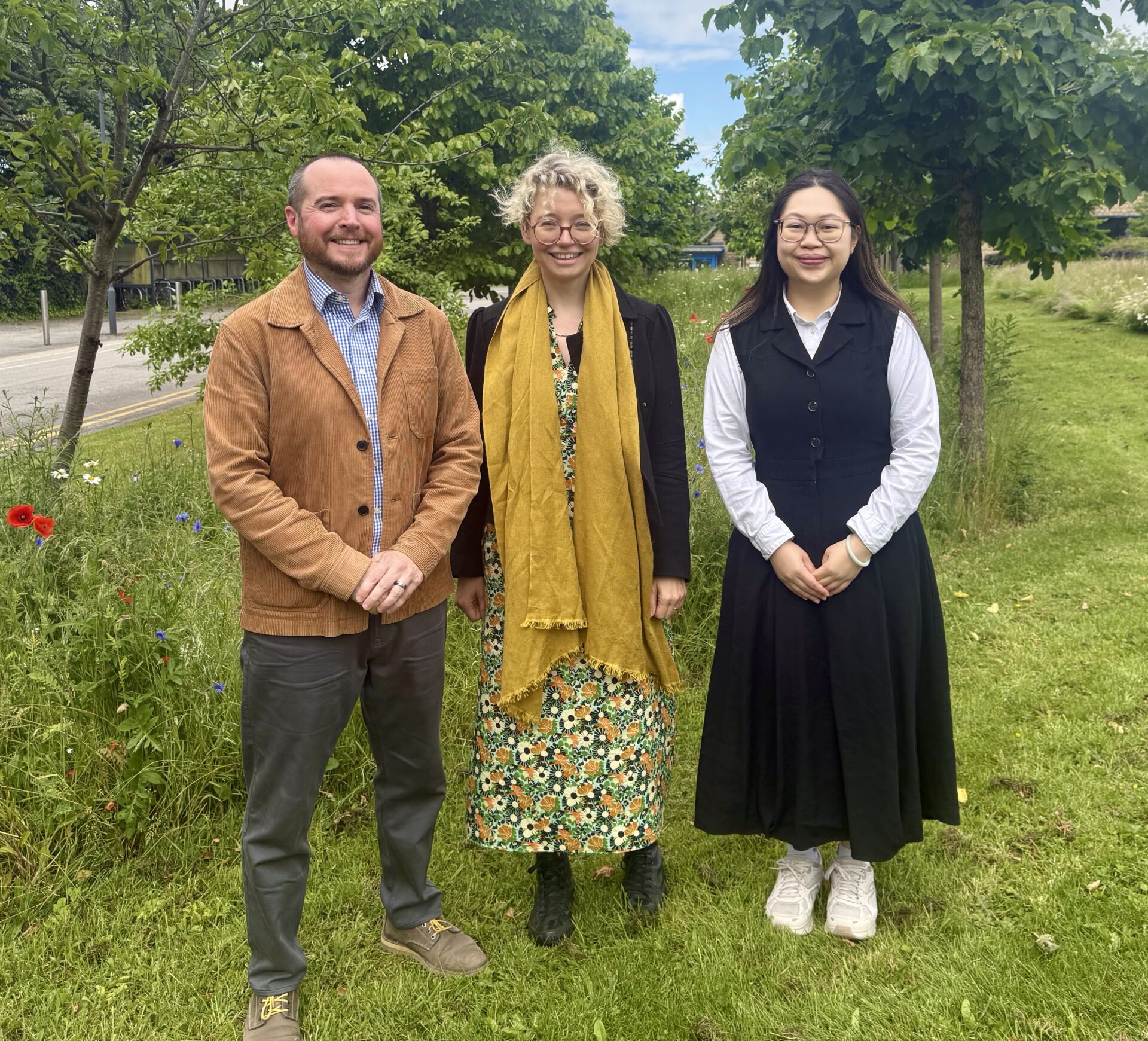
The project team are Dr Lena Jaspersen, Professor Matthew Davis and Amelie Sim. Together, they are exploring how academic conferences can become more sustainable, accessible and inclusive, while retaining the value of academic exchange and professional connection.
Want to get involved?
We would love to hear from colleagues who have experience with hybrid or remote conferencing, whether positive, negative or mixed, and whether as participants, organisers, chairs, facilitators or technical support staff.
We are particularly interested in:
- positive and negative experiences of hybrid or remote participation in academic conferences
- innovative conference formats or practices
- challenges around accessibility, engagement, networking or inclusion
- examples of conferences that have approached hybrid participation particularly well or poorly
- reflections on sustainability and the future of academic conferencing
If you would like to contribute to the project, share your experiences or register your interest in taking part, please complete our short registration form:
You can also contact
Lena Jaspersen
if you have any questions about the project.
We are keen to connect with colleagues interested in the future of more sustainable and inclusive academic exchange.